


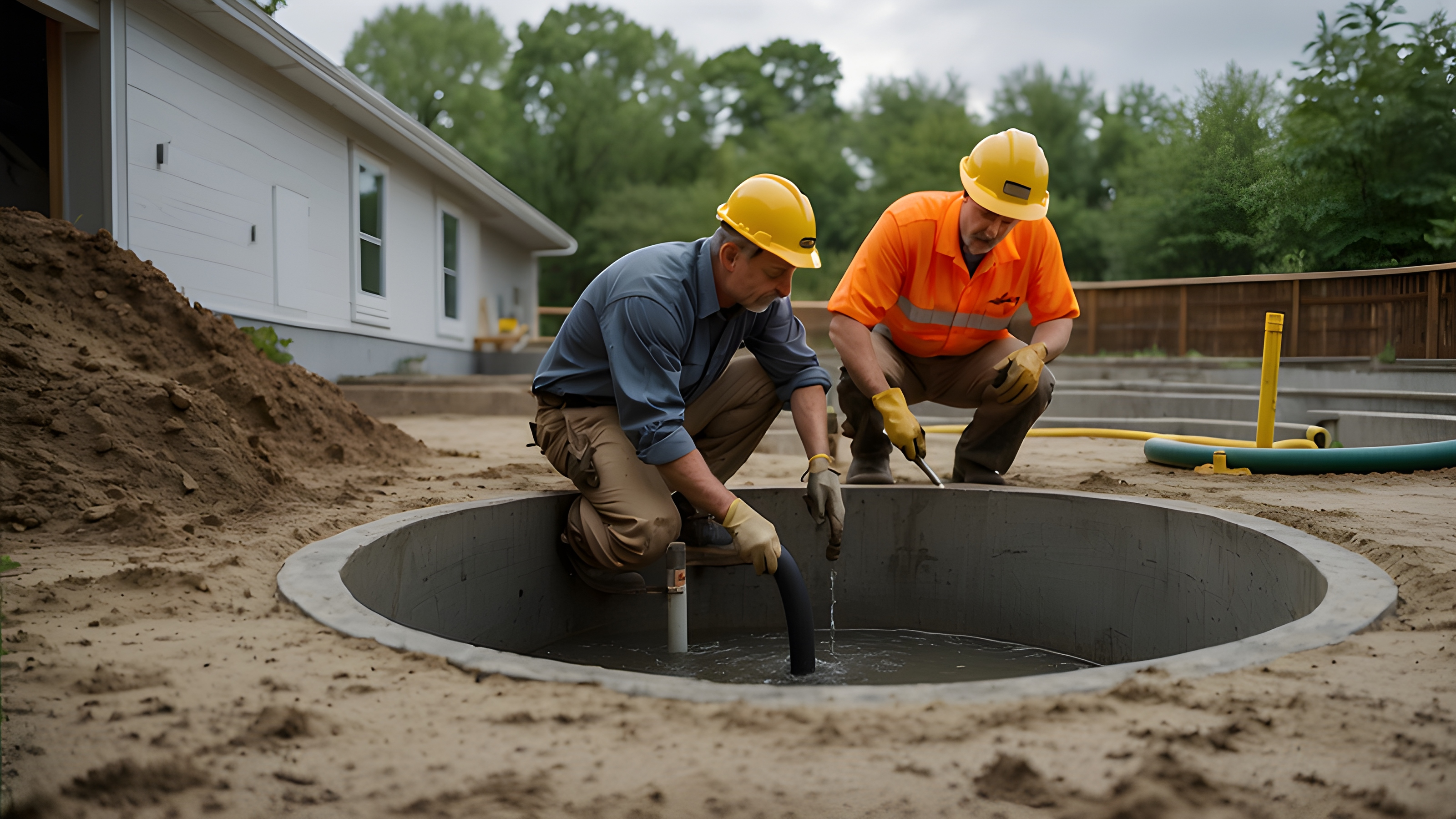
What Does a Professional Sump Pump Installation With Battery Backup Actually Cost in New Castle County?
In New Castle County, DE, a professional sump pump installation with a deep-cycle battery backup system runs between $2,400 and $3,800. That price covers a cast-iron submersible primary pump, an AGM battery, Schedule 40 PVC discharge with air gap, a code-compliant 24-inch HDPE basin, and the county plumbing permit. Commercial projects requiring dual-battery redundancy and remote monitoring can push past $5,500.
I’ve seen facility managers blink at those numbers. Then I show them the invoice from a tenant damage claim after a $800 install failed mid-storm. That number was $12,000, and it didn’t include the two days of lost rent from a medical office building along DE 1 that had to shut its doors entirely.
We’re AVG Waterproofing LLC. We operate from 500 Apple Rd, Newark, DE 19711 with 25 years of U.S. structural experience and six years of deep specialization in the Cecil clay, Matapeake silt, and Coastal Plain soils that dominate this region. We don’t send salespeople. We send structural experts who size pumps using hydrostatic pressure math, not guesswork.
Why a Generic Residential Sump Pump Setup Fails Commercial Properties
Most national waterproofing franchises treat a 40,000-square-foot commercial basement the same way they treat a rowhouse in Elsmere. One pump, one undersized battery, no permit, discharge line aimed straight into the sanitary sewer. It works until it doesn’t.
Last spring we got called into a Wilmington Riverfront property (a tenant had been complaining about humidity for months, and the property manager had already paid another contractor twice). The existing sump had a tether float jammed against the basin wall. The single 40Ah battery was dead. The discharge line? Connected directly to the building’s sanitary sewer, which is a flat-out violation of New Castle County Code Section 3101. Nobody had pulled a permit. There was zero documentation for the insurance company.
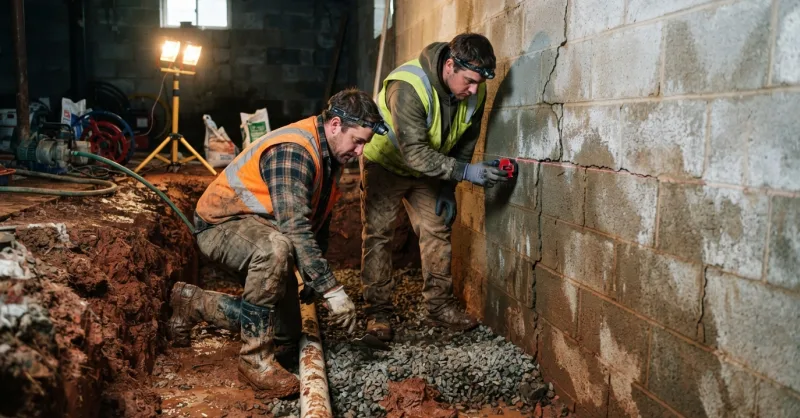
We ripped the whole thing out. Installed a Zoeller M53 cast-iron submersible with a vertical mechanical float, dual 100Ah AGM batteries on a separate 2400W inverter, and ran the discharge to daylight with a backflow preventer and air gap, ten feet from the foundation per code. Total cost was roughly $4,900 including the county plumbing permit. The property manager told me the previous contractor charged $750. (I bit my tounge and didn’t say what I was thinking.)
The Difference Between a Pump Swap and Engineered Flood Defense
A pump swap is a parts transaction. What we deliver is a documented, code-compliant flood defense system. Here’s what that actually looks like on a commercial install:
- Observation well boring to map seasonal water table elevation on the property
- Hydrostatic pressure calculation based on Cecil soil infiltration rates and base flood elevation data
- Primary pump sized to deliver at least 43 GPM at 10 feet of head, which is the threshold for New Castle County’s saturated-season groundwater inflow
- Dual-battery bank with 8+ hours continuous runtime at 2,200 GPH peak, because coastal nor’easters don’t care about your single-battery spec sheet
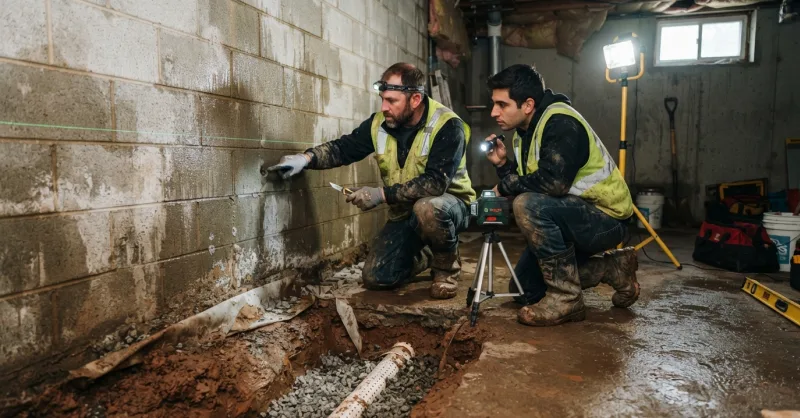
- Post-installation video pipe scoping, simulated power failure test, and discharge rate verification with a calibrated flow meter
We hand you the county permit, the IDDE compliance affidavit, the flow meter results, and the battery discharge test documentation. Your insurer gets exactly what they need for the next audit.
How Long Does a Battery Backup Sump Pump Actually Last During a Delaware Nor’easter?
Not long enough, if your contractor installed the industry-standard 12V 40Ah unit.
Here’s the math most installers skip. A 40Ah battery running a backup pump at 2,200 GPH draws roughly 10 amps. After amp-hour derating for temperature (AGM batteries lose capacity below 50°F, and your basement in January is cold), you’re looking at about four hours of real runtime. Coastal nor’easters from October through March regularly generate 48-hour rainfall events exceeding four inches. Power outages during those events average 6 to 12 hours across the county.
Four hours of backup during a twelve-hour outage leaves your parking garage or below-grade storage unprotected for eight hours. We’ve pulled waterlogged inventory out of Riverfront commercial basements that lost protection at 2 AM because nobody ran the derating calculation.
We install dual 100Ah AGM batteries with an automatic transfer switch, a 12V DC charging module with digital float and overload protection, and a GSM-based outage alert that texts you and your building engineer the moment grid power drops. The system self-tests weekly. You never wonder if it works. When your facilities team is asking should we upgrade our existing single-battery sump backup to a dual-battery system for a multi-tenant building, the answer is almost always yes, and the numbers prove it before we ever touch a wrench.
Cecil Clay and the Hydrostatic Pressure Problem Nobody Talks About
Northern New Castle County sits on Cecil soil series, hydrologic group C/D. Low infiltration. Expansive clay. Water doesn’t drain through it; it pools against your foundation and pushes inward.
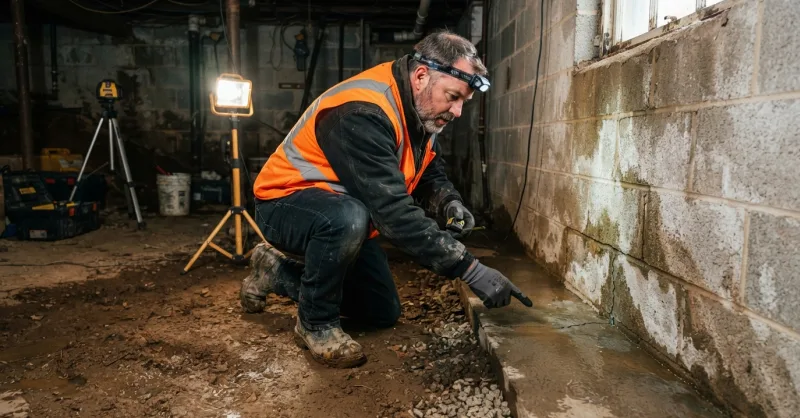
I’ve cut open basement walls in Hockessin fieldstone foundations from the 1920s where the mortar joints were actively weeping. The water table was sitting just 18 inches below grade after a week of rain. Those old foundations need external weeping tile tie-ins to an interior collection system before a sump pump can do anything useful. Meanwhile, a 1990s slab-on-grade addition in Pike Creek demands a completely different approach: interior perimeter drain tile retrofitted under the slab edge, routed to a gas-tight 24-inch HDPE basin.
The point is that what type of sump pump works best for Delaware’s clay soil and high water table depends entirely on the foundation style, the soil profile, and the water table depth at your specific property. A vertical mechanical float submersible with a cast-iron body resists the sediment abrasion that Cecil clay throws at pump internals. Tether floats jam. Diaphragm float backup switches eliminate that failure mode. We’ve installed over 1,500 systems across this county and can tell you, the one-size-fits-all quote from a franchise operation is a guess dressed up as a number.
If your foundation has existing structural issues like bowing walls or settlement cracks, the waterproofing conversation gets more complex. We diagnose those problems as part of the same site visit. Our team handles bowing basement wall repair and permanent foundation crack repair alongside waterproofing, because water intrusion and structural failure are rarely separate problems in this soil.
New Castle County Sump Pump Permits and the Discharge Rules Your Current Contractor Probably Broke
New Castle County Department of Land Use requires a plumbing permit for sump pump installations. Emergency installs get 24-hour review. Standard jobs move through the normal permitting queue. We pull every permit ourselves, include the fee in our line-itemed quote, and schedule the inspection.
The discharge rules trip up most contractors. County code mandates sump pump discharge directed to a storm sewer connection or to daylight at least 10 feet from the foundation, with an air gap to prevent cross-contamination. Discharge into the sanitary sewer is illegal. It contributes to combined sewer overflow surcharging, which is exactly the problem flooding basements in Southbridge Wilmington during 2-inch-per-hour storms.
We build every discharge assembly from Schedule 40 PVC, 1.5-inch diameter, with a backflow preventer and a directional T for code-compliant daylighting. Our installations automatically comply with the county’s Illicit Discharge Detection and Elimination Program. We’ll report the plumber who doesn’t. (That’s not a threat; it’s a public health obligation.)
For commercial properties in floodplain zones near Red Clay Creek or the Delaware River Basin, we provide a signed floodplain management ordinance affidavit as part of the installation handover. Do commercial properties in Delaware flood zones need special sump pump permit documentation? Yes, and most contractors don’t even know the affidavit exists. We do, because we’ve filed them for properties in 100-year and 500-year flood zones across the county.
90-Minute Emergency Sump Pump Replacement Across New Castle County
When a pump fails during a NOAA watch-level event, you don’t have 48 hours to wait for a callback. We dispatch dual-crew trucks stocked with Zoeller M53 primary pumps, AGM batteries, Schedule 40 PVC fittings, and basin components. Average on-site arrival runs 90 minutes across zip codes 19802 through 19720.
Our crews pair a licensed plumber with an electrician. The plumber handles basin prep, pump installation, and discharge routing. The electrician wires the battery controller, the 12V DC charging module, and verifies the system is backfeed-proof. One visit. No subcontractor delays.
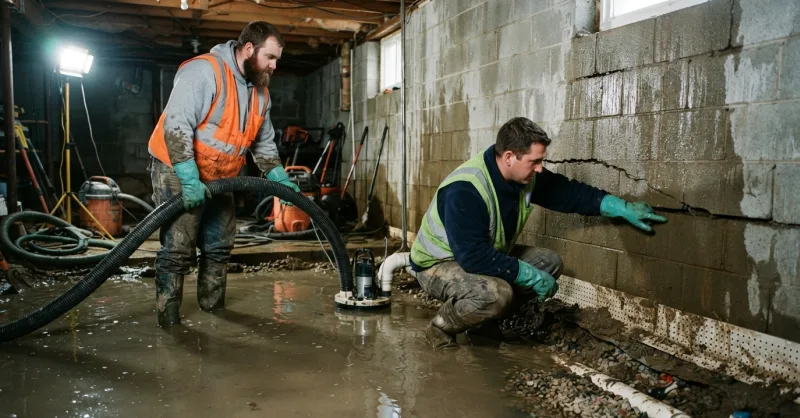
A property manager in Bear called us on a Saturday night last November. Parking garage had three inches of water and rising. The existing pump’s piggyback float had seized, and the backup battery was a corroded 35Ah unit with maybe 90 minutes of charge left. We had a new primary pump running and a dual-battery backup wired within four hours. The tenants never knew it happened. (The previous contractor’s “emergency line” went to voicemail. We checked.)
If you manage facilities anywhere along the I-95 corridor from southern Wilmington to Middletown, or along DE Route 7 through Stanton and Christiana, our dispatch covers you. Full basement waterproofing services are available as a follow-up scope after the emergency is stabilized.
Where Your Money Goes: A Transparent Commercial Sump Pump Quote
| Line Item | What It Covers | Typical Cost Range |
|---|---|---|
| Primary Pump | Zoeller M53 cast-iron submersible, 1/3 HP, vertical mechanical float, 43 GPM at 10 ft head | $350 – $500 |
| Battery Backup System | Dual 100Ah AGM batteries, 12V DC controller, automatic transfer switch, GSM alert module | $900 – $1,400 |
| Basin and Discharge | 24-inch HDPE basin with gas-tight lid, Schedule 40 PVC discharge, backflow preventer, air gap | $300 – $500 |
| Labor (Dual Crew) | Licensed plumber + electrician, 4-6 hours on-site | $600 – $1,200 |
| County Permit | New Castle County Department of Land Use plumbing permit | $75 – $150 |
| Post-Install Verification | Video pipe scoping, simulated power failure test, calibrated flow meter discharge check | Included |
No hidden fees. No surprise upcharges for “electrical work” after the contract is signed. We hand you a single document that your insurer, your building engineer, and your portfolio VP can all read without calling us for clarification. What documentation should a facilities director expect after a commercial sump pump installation in Delaware? You should receive the county plumbing permit, video scoping results, flow meter verification, battery discharge test data, and a signed floodplain management affidavit if the property sits in a designated flood zone.
Written by: Alex Velasquez
AVG Waterproofing LLC