


Why Does Water Keep Leaking Into My Basement After Every Storm in New Castle County?
I get calls about this almost weekly. A homeowner or a facilities director watches water creep across their basement floor during a heavy rain and assumes the fix is straightforward. Seal a crack, maybe add a dehumidifier. Nine times out of ten, the real problem sits underground, buried in the clay-heavy soils that blanket most of New Castle County from Pike Creek down through Bear and Glasgow.
The short version: if you need to hire a contractor to stop water leaking into your basement, you need someone who understands why the water arrives in the first place. Not someone who shows up with a tube of hydraulic cement and a “lifetime warranty” printed on copy paper.
We operate out of 500 Apple Rd, Newark, DE 19711, and we’ve spent over 25 years diagnosing structural water intrusion across the U.S., with the last 6 years focused specifically on the tri-state soils of Delaware, southeastern Pennsylvania, and northeastern Maryland. I’m telling you that because it matters. The clay here behaves differently than what you’ll find 90 miles north in the Jersey Piedmont or down on the Delmarva coastal plain.
How Brandywine Blue Rock Clay Drives Hydrostatic Pressure Against Your Foundation
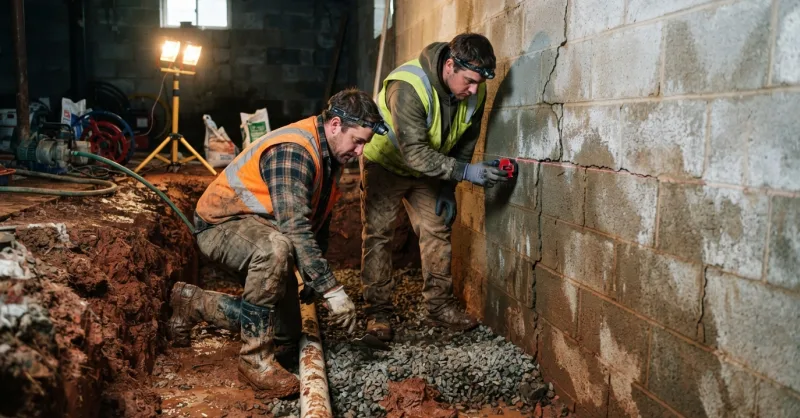
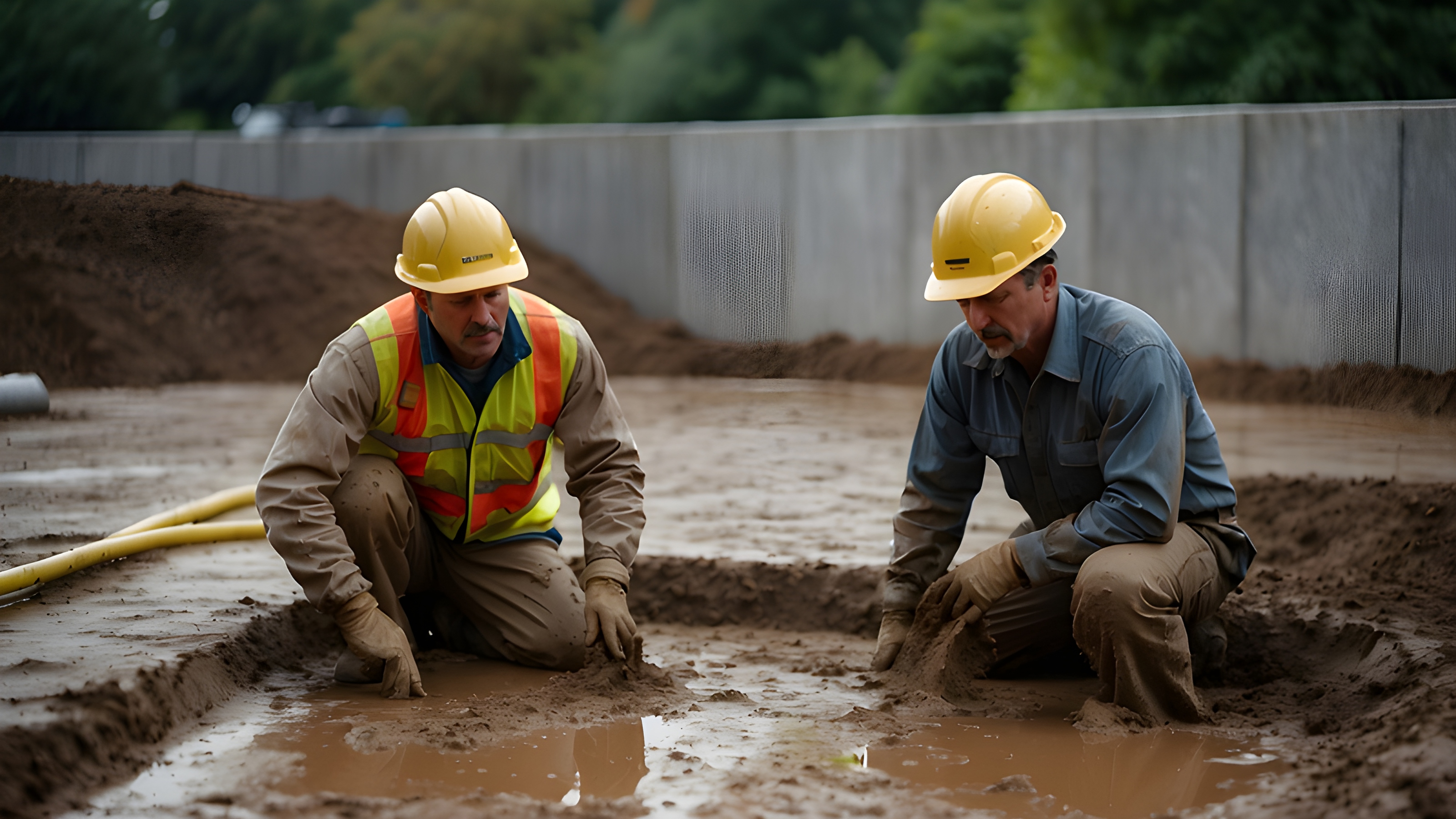
Here’s something most generic waterproofing companies won’t explain. The dense Brandywine Blue Rock clay lenses that sit beneath neighborhoods along DE-7 and through the Hockessin corridor act like a bathtub around your foundation. When it rains, water saturates the backfill soil (which is almost always looser than the native clay), pools at the footing level, and pushes inward through cold joints, cove joints, and hairline cracks.
That’s hydrostatic pressure. And it doesn’t care about the sealant paint someone rolled onto your basement wall three years ago.
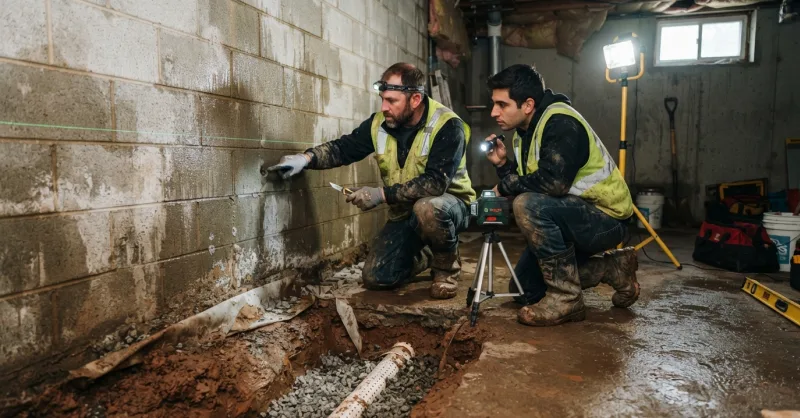
I ran a diagnostic last spring on a 1987-built townhome in the 19702 zip code, just off Kirkwood Highway. The property manager was convinced the leak came from a window well. We dropped an in-slab relative humidity probe and got readings north of 97%. The moisture was migrating through the concrete slab itself, driven upward by a water table sitting barely 30 inches below grade. No amount of window well repair would have touched that problem. We installed a sub-slab depressurization channel tied to a sealed sump basin with dual pumps, and the slab dried out within two weeks.
What Makes the Delaware Piedmont Boundary So Tricky
There’s a geological fall line running roughly along Route 7. North of it, you’re dealing with weathered Wissahickon schist and metamorphic rock basements. South, it’s coastal plain sediments. The leakage patterns differ completely between these zones, and a contractor who treats them the same will get it wrong. Fieldstone foundations in Wilmington’s Trolley Square area need vapor-open siloxane treatments. Poured concrete walls in a Glasgow planned development need crack injection and exterior drain board systems. One approach, applied blindly, wastes your money.
What Should a Portfolio Manager Look For When Hiring a Basement Leak Repair Contractor?
If you manage multiple residential properties across the I-95 corridor in Delaware, you already know the chaos that hits when three basements flood simultaneously during a nor’easter. Tenant calls stack up. Insurance adjusters start circling. And the last thing you need is a contractor who can only handle one address at a time.
I built AVG Waterproofing LLC around solving exactly that operational headache. Our tagline is “Your Home In Good Hands,” and we mean it for single homeowners and for the facilities director juggling 40 units in Arundel or Meridian Crossing.
Here’s what actually separates a qualified basement waterproofing contractor from someone running a glorified handyman operation:
- They pull permits. New Castle County’s 2018 IRC amendments require any interior perimeter drain system connecting to a sump pit to have a sealed, gasketed lid vented to the exterior. We handle the full permit application and inspection coordination with County Land Use, and you get finaled documents for your compliance file.
- They diagnose before they quote. We run a three-point check on every property: soil plasticity at the foundation perimeter, in-slab humidity differentials, and crack vector mapping against USGS surficial geology overlays for the specific zip code. That’s how you get a real answer instead of a recycled sales pitch.
- Their warranty transfers with the property. Our hydrostatic offset warranty records against the deed, not against our company name. (I’ve seen competitors change their LLC every four years just to shed warranty obligations. It’s not uncommon and its definitely something to watch for.)
We provide free, no-pressure structural estimates. No sales scripts, no manufactured urgency. If the problem is a $200 grading fix, we tell you. If telling you the truth costs me a project, so be it.
Interior vs. Exterior Basement Waterproofing: Which Method Stops the Leak Permanently?
This question comes up in almost every estimate. The honest answer is: it depends on what’s failing and what’s physically accessible.
Exterior Positive-Side Waterproofing
The definitive method for permanent waterproofing in this region involves full excavation to the footing, repair of any concrete spalling, application of an elastomeric fluid-applied membrane, installation of a dimple drain board to relieve hydrostatic pressure, and a 4-inch corrugated PVC footing drain bedded in washed gravel. That drain connects to either an interior sump basin with dual-pump battery backup or a daylight discharge on a sloping lot.
It’s invasive. It’s expensive. And it addresses the root cause of regional groundwater pressure rather than just managing symptoms.
Interior Negative-Side Systems
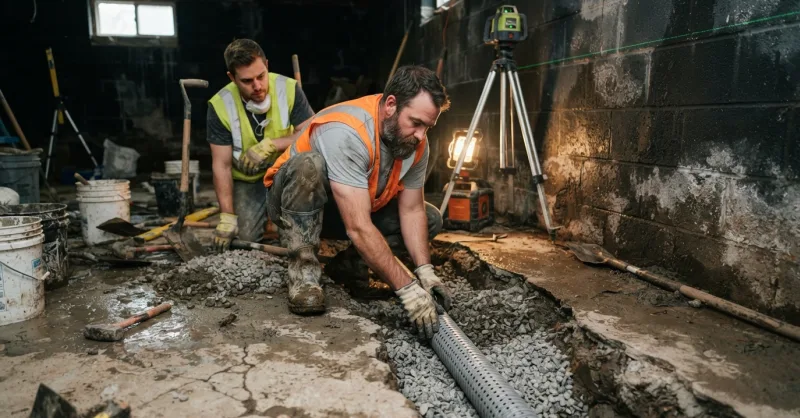
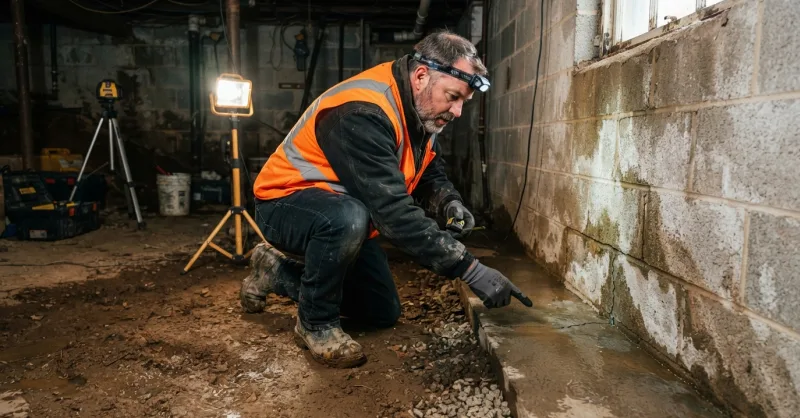
When exterior excavation isn’t feasible (sunroom additions, driveways, neighboring structures within 18 inches of the foundation wall), an interior perimeter drainage channel with a sealed sump system becomes the practical remedy. We trench along the cove joint where the wall meets the footing, install a drainage track, and route water to a properly vented sump pit with a discharge line that includes an ice-guard air gap, which is code-required in our county to prevent freeze blockages during winter storms.
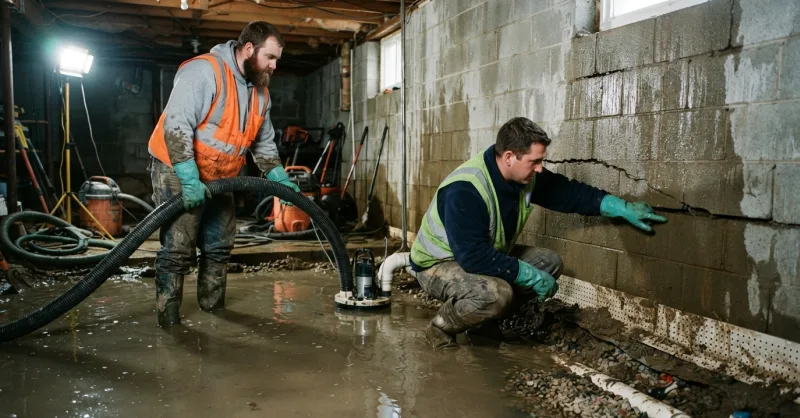
I had a situation last January on a property off Silverside Road where the discharge line froze solid on a north-facing wall. The previous contractor ran a straight PVC line with no air gap and no pitch correction. The sump backed up, flooded the basement, and the property owner had to relocate two tenants. We retrofitted the discharge with a proper ice-guard termination and re-graded the line. Hasnt frozen since.
If you’re dealing with foundation cracks that actively leak, we use non-shrink structural grout injection or polyurethane crack injection depending on whether the crack is structural or cosmetic. The distinction matters enormously, and getting it wrong means the crack reopens within a season.
Why Do Sump Pumps Fail During Delaware Storms, and How Do You Prevent Multi-Unit Disasters?
Sump pump burnout peaks during two specific windows in New Castle County: late March through mid-April, when snowmelt and spring nor’easters overlap, and late August through September during tropical moisture events. The pump runs continuously, the float switch sticks, and suddenly you’ve got 6 inches of standing water in a basement.
For portfolio managers, this scenario multiplies. Five properties in Fox Run, three in Bear, two near Christiana. All flooding at the same time.
We pre-position for this. Our crews carry heavy submersible pumps and can respond to multiple addresses across the county within a single dispatch window. We also install remote telemetry float sensors on dual-pump systems that alert our dispatchers when cycling exceeds threshold limits during a storm, which means we can mobilize a technician before the system fails, not after your tenant calls at 2 AM.
Our basement waterproofing systems include sump pump installation and upgrades specifically designed for the high water table conditions common in the 19701 and 19702 zip codes.
Can a Waterproofing Contractor Help With Insurance Claims on Basement Water Damage?
This is where things get political. Most homeowners insurance policies cover sudden water intrusion from a broken pipe or surface water entry. They typically exclude long-term hydrostatic groundwater seepage. Insurance adjusters know this distinction, and they’ll use it to deny claims whenever possible.
We produce forensic causation reports that document exactly where the water originated and why. If your basement flooded because a deteriorated foundation tar coating failed and allowed surface runoff to penetrate through the wall during a rain event, that’s a different insurance conversation than gradual groundwater rise through a slab. Our reports differentiate between the two using verifiable local aquifer data and on-site moisture testing.
For REIT portfolio managers and asset preservation directors, these reports also de-risk properties for future sale disclosures. You get a documented root cause, a record of the permanent repair, and a transferable warranty certificate. That’s three fewer headaches during due diligence.
The County Code Detail Most Contractors Ignore
New Castle County requires sump pump discharge to terminate at least 10 feet from property lines. I’ve seen systems where the discharge dumps right into the foundation flower bed, creating a recirculation loop where the same water re-enters the footing drain and gets pumped out again endlessly. The pump burns out, the basement floods, and the homeowner blames the equipment instead of the installation. We carry geofenced documentation of county discharge requirements on every service vehicle. That’s not a selling point, that’s just doing the job right.
How to Schedule a No-Pressure Basement Water Intrusion Assessment in the Tri-State Area
AVG Waterproofing LLC covers New Castle County DE, Chester County PA, and Cecil County MD. We’ve built 25 years of structural experience into a diagnostic process that doesn’t rely on sales scripts or pressure tactics.
If you manage a residential portfolio and need a county-wide below-grade envelope survey with moisture mapping, we deliver binding, fixed-cost remediation blueprints with local permit roadmapping. If you’re a homeowner with water pooling along your basement wall every time it rains, we show up, test the soil and the slab, and tell you exactly what’s failing.
No quick fixes. No nonsense. Permanent results.
Reach out through our LinkedIn or follow project updates on Instagram. Or just call us. We answer our phones, and we’ll give you a straight answer about whether your basement problem needs a $300 fix or a $15,000 engineered system. Either way, you’ll know the truth before we pick up a tool.
Your home is in good hands. And if you’re noticing foundation settling or soil movement alongside the water issues, that’s a conversation we should have sooner rather than later. The two problems feed each other in Delaware’s expansive clay, and waiting a season can turn a repair into a reconstruction.
Written by: Alex Velasquez
AVG Waterproofing LLC